The Historical Tapestry of Italy’s Culinary Fragmentation
Before Italy became a unified nation-state in 1861 during the Risorgimento, the peninsula was a complex patchwork of independent kingdoms, duchies, republics, and territories occupied by foreign powers. This deep political fragmentation over centuries laid the groundwork for highly distinct regional culinary identities. Each city-state, from the wealthy Republic of Venice to the Spanish-ruled Kingdom of Naples, cultivated its own unique food culture to assert its autonomy, wealth, and cultural superiority.
The aristocratic courts of northern Italy, such as those in Milan, Florence, and Ferrara, employed master chefs who designed elaborate, meat-heavy banquets showcasing rare spices and refined techniques. Conversely, the southern regions, often subjected to heavy taxation by foreign rulers, developed a highly resourceful, vegetable-forward cuisine. This stark contrast between courtly gastronomy and rural sustenance established culinary borders that remain highly visible today, long after political unification.
Geographical isolation further reinforced these culinary divisions. The formidable Apennine Mountains, running down the spine of the peninsula, and the rugged Alps in the north physically separated communities for generations. Without easy transportation or trade routes between neighboring valleys, villages were forced to rely entirely on hyper-local ingredients, leading to the creation of distinct micro-cuisines where a pasta shape or cheese variety could change completely within a distance of just a few miles.
Geography, Climate, and the North-South Divide
Italy’s diverse geography and climatic zones played a fundamental role in shaping its regional ingredients and cooking techniques. The northern territories, anchored by the vast and fertile Po River Valley, experience cold, damp winters and hot summers. This environment favored cattle farming and agriculture, which led to a culinary tradition centered around dairy, butter, cream, and lard. Rice and corn thrived in these damp plains, giving rise to regional staples such as risotto in Lombardy and Veneto, and polenta in Friuli-Venezia Giulia.
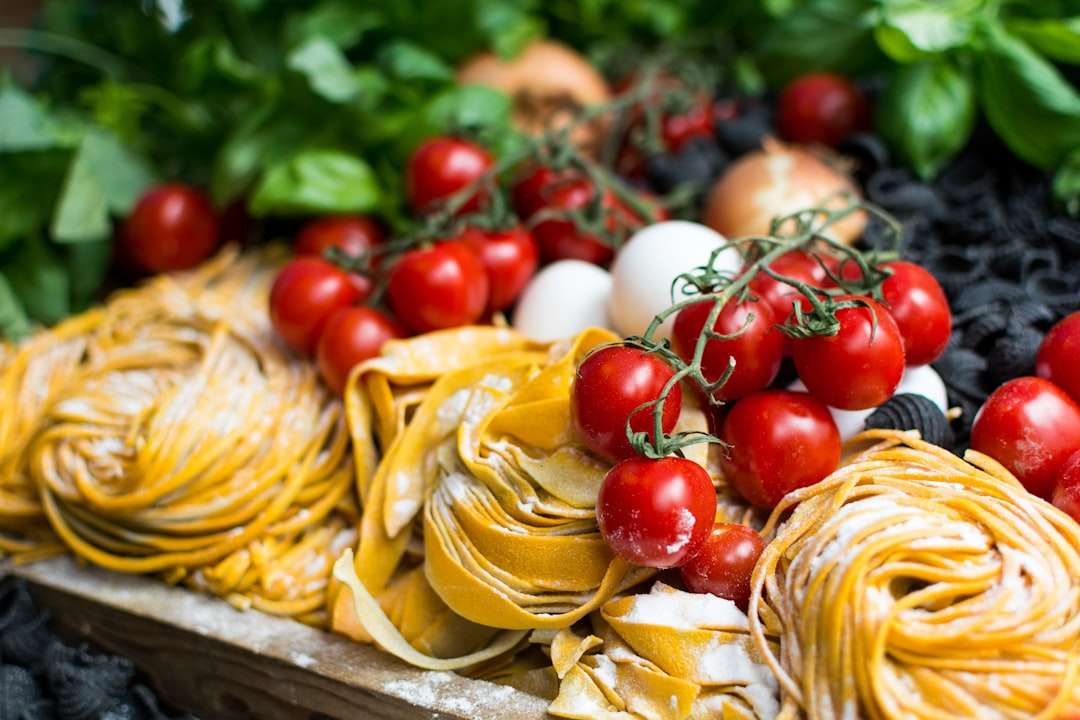
In stark contrast, Southern Italy is defined by a rugged, sun-drenched Mediterranean climate with rocky coastlines and volcanic soils. These conditions were ideal for the cultivation of olive trees, durum wheat, and drought-resistant vegetables. Olive oil became the primary cooking fat, replacing northern butter, while dried durum wheat pasta became the daily sustenance. The warm, coastal waters provided an abundance of fresh seafood, which southern cooks paired with simple, bright ingredients like wild herbs, garlic, and capers.
These environmental differences also dictated food preservation strategies. In the cooler, humid north, preserving meat relied heavily on curing whole muscles or grinding them into sausages, yielding delicate delicacies like Prosciutto di Parma and Mortadella. In the hot, dry south, dehydration was the primary method of preservation, allowing communities to sun-dry tomatoes, figs, and long strands of pasta, ensuring a stable food supply through the scorched summer months.
Foreign Influences and Historical Trade Routes
The culinary landscape of Italy is also a map of its historical interactions with foreign invaders, traders, and explorers. Perhaps nowhere is this more evident than in Sicily, which sits at the center of the Mediterranean. Over millennia, the island was conquered by Greeks, Romans, Arabs, Normans, and Spaniards. In particular, the Arab rule of Sicily during the 9th to 11th centuries introduced revolutionary ingredients, including citrus fruits, spinach, sugar cane, saffron, raisins, and pine nuts, which define the sweet-and-savory flavor profile of Sicilian cuisine today.
Further north, the Maritime Republic of Venice leveraged its massive merchant navy to establish lucrative trade routes with the Byzantine Empire and the Far East. Venetian cuisine became heavily influenced by the exotic spices that passed through its ports, such as black pepper, nutmeg, cinnamon, and cloves. The Venetians also imported stockfish, a dried cod from Norway, which they transformed into the beloved regional dish baccalà mantecato, demonstrating how global trade routes could redefine local culinary traditions.
The discovery of the Americas in the late 15th century sparked the Columbian Exchange, which introduced ingredients that would forever change Italian cuisine. Tomatoes, bell peppers, chili peppers, zucchini, potatoes, and maize were brought back to Europe. Though initially met with skepticism and feared to be poisonous, these ingredients eventually found their perfect terroirs in Italy. The tomato, for instance, thrived in the rich volcanic soil of Mount Vesuvius near Naples, ultimately giving birth to modern pizza and classic Neapolitan pasta sauces.
La Cucina Povera: The Art of Frugal Ingenuity
To truly understand the heart of Italian regional cooking, one must explore the philosophy of la cucina povera, literally translated as ‘the kitchen of the poor.’ This culinary ethos was born out of economic necessity and systemic poverty that affected rural peasants, particularly in the agricultural south and the sharecropping estates of Tuscany. Lacking access to expensive cuts of meat or luxury imports, home cooks had to rely on extreme creativity to turn meager ingredients into nourishing, flavorful meals.
This philosophy of scarcity yielded some of Italy’s most celebrated regional classics. In Tuscany, stale bread was never wasted; instead, it was used to thicken hearty vegetable soups, creating dishes like ribollita and pappa al pomodoro, or tossed with ripe tomatoes and olive oil in a panzanella salad. In Rome, working-class families and slaughterhouse workers utilized the offal and secondary cuts left behind by the wealthy, perfecting dishes like trippa alla Romana (tripe cooked with pecorino and mint) and coda alla vaccinara (braised oxtail stew).
Rather than being discarded as relics of a difficult past, the principles of la cucina povera are celebrated as the pinnacle of Italian gastronomy. This approach teaches a profound respect for seasonal produce, zero-waste cooking, and the ability to highlight the pure, unadulterated flavor of a single ingredient. It proves that the most enduring culinary traditions are often those forged in the fires of necessity and sustained by resourcefulness.
The Preservation of Culinary Heritage in Modern Italy
The survival of Italy’s regional cooking traditions in the face of modern globalization is a testament to the country’s deep cultural pride and generational transmission of knowledge. Historically, recipes were rarely written down; instead, they were passed down orally from grandmothers (le nonne) to younger generations through hands-on practice in the home kitchen. This domestic transmission ensured that regional techniques, such as hand-rolling orecchiette in Puglia or making trofie in Liguria, remained living traditions.
To protect this invaluable culinary heritage from industrialization, Italy and the European Union established rigorous designation systems. Labels like DOP (Protected Designation of Origin) and IGP (Protected Geographical Indication) legally safeguard the authenticity of regional products. These regulations ensure that cheeses like Parmigiano-Reggiano, vinegars like Balsamic Vinegar of Modena, and cured meats like San Daniele prosciutto can only be produced in their historical regions of origin using traditional methods, preserving their unique regional characteristics.
Additionally, the birth of the Slow Food movement in Piedmont in 1986 acted as a powerful counterweight to the rise of fast food and corporate agriculture. Founded by Carlo Petrini, the movement advocates for local food cultures, biodiversity, and agricultural sustainability. Through initiatives like the Ark of Taste, which catalogs endangered heritage foods, the movement has helped safeguard hundreds of regional Italian ingredients, ensuring that the rich, diverse culinary mosaic of the Italian peninsula continues to feed future generations.
Related Content
🍽️ Recommended Recipes to Try:
- fettuccine boscaiola
- rigatoni arrabbiata
- linguine with clam sauce no wine
- grilled swordfish salsa verde
📖 Further Reading:
- Beyond Ormuz: Discover the Rich Mystery and Spices of Persian Comfort Food
- Spider-Verse Cooking: Why Everyone is Craving Brooklyn-Style Chopped Cheese
- Pedro Pascal’s Favorite Cheat Meal: The Unstoppable Rise of Air Fryer Beef Empanadas
Want to expand your skills? Explore more guides in our
Cooking Tips category!